Cutting Knowledge
Understanding Cutting Saddles
Why Cutting Saddles Are Built the Way They Are
Every design element in a cutting saddle exists because of one rule: once a competitor drops the reins, they cannot pick them back up until the cow is settled or the run is over. That rule — the free-rein rule — is the most consequential regulation in western performance horse sports, and it shapes the cutting saddle from the seat to the rigging.
When a cutting horse locks onto a cow and begins working, the horse drops into an athletic crouch and moves with explosive, violent lateral bursts. The rider has no reins to balance with. The saddle has to hold the rider centered, absorb those lateral forces, and allow the rider's hips to follow the horse's movement without interference. A saddle that fights the rider in those moments costs cattle and costs money.
The Key Design Features
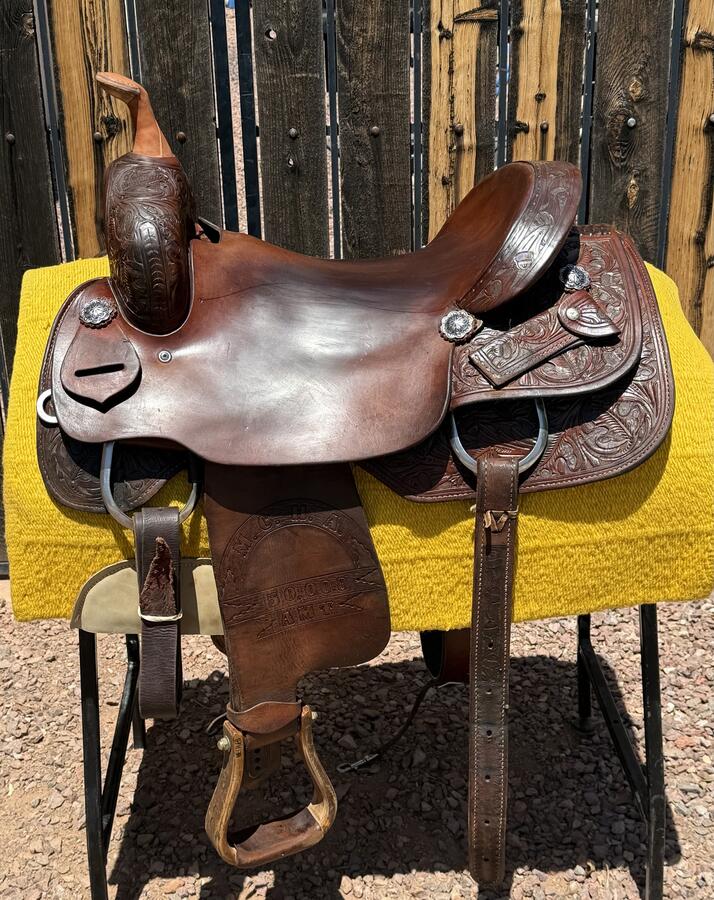
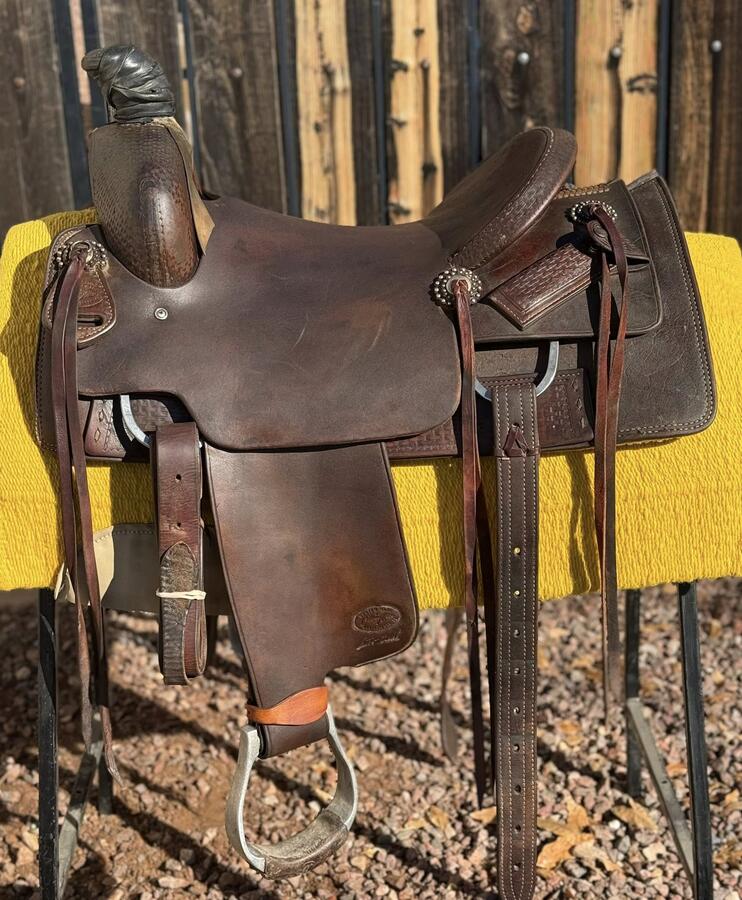
The deep seat keeps the rider from being thrown forward when the horse stops hard or spins. The cantle is higher than a reining saddle and provides the back support a rider needs when their horse drops its hindquarters. The horn on a cutting saddle is tall and substantial not for dallying a rope but as a bracing point: cutters will brace a hand on the horn during the work, and the horn must be positioned and shaped to support that without interfering with natural hand position.
The rigging on a cutting saddle is typically dropped — meaning the rigging ring hangs lower on the tree, pulling the cinch back from the horse's shoulder and allowing freer front-end movement. The skirts are usually round rather than square, which reduces weight at the back corners and allows the saddle to move with the horse more freely. The stirrup position is typically forward-balanced, keeping the rider's leg under them rather than behind, so they can absorb sudden stops without being launched.
The seat leather is often roughed out or sueded to hold the rider in place during the explosive lateral moves that define the work. Smooth leather cuts are available and preferred by some riders.
Competition vs. Ranch Cutting
NCHA competition cutting and ranch cutting are different events with different saddle requirements. NCHA competition saddles are purpose-built for the show pen — deep seats, correct horn position, light weight, and the specific geometry that professional cutters and serious non-pros have refined over decades. Ranch cutting allows a broader range of saddle styles and often uses cow horse or crossover builds rather than strict cutting saddle geometry.
If you are competing in NCHA or serious ranch cutting events, buy a purpose-built cutting saddle. If you are sorting cattle, working a ranch, and occasionally entering a ranch cutting class, a quality cow horse or crossover saddle may serve you better across the full range of your work.
What to Look for in a Used Cutting Saddle
The tree is the foundation. A cracked or twisted tree in a cutting saddle is not repairable and not rideable — it must be replaced, and replacement costs often exceed the saddle's value. Beyond the tree, examine the rigging plates and rings for wear, check the latigo leather for dryness and cracking, and look at the stirrup leathers where they meet the fenders. The horn wrap condition tells you how hard the saddle has been used. A saddle that has been properly cared for will show even coloring in the leather with no dry spots or cracking at the corners of the skirts.